
How Emerging Food & Bev CPG Founders Accidentally Build Marketing Chaos
Most new food and beverage CPG brands don’t start with a marketing strategy.
They start with a conviction.
Something like:
Why is pasta sauce still loaded with sugar and preservatives?
Protein bars either taste like chalk or candy.
Why does plant-based milk have fifteen ingredients?
Why does healthy cereal feel like cardboard?
Why is the entire salad dressing aisle stuck in the 1990s?
So the founder makes the product.
They test it with friends. People love it.
Someone says, “You should sell this.”
They start selling it at the local farmers’ markets and bodegas,
And suddenly, a company begins.
At this stage, the thinking is simple and clear:
If the product is better, people will want it.
That belief carries the brand through the first phase.
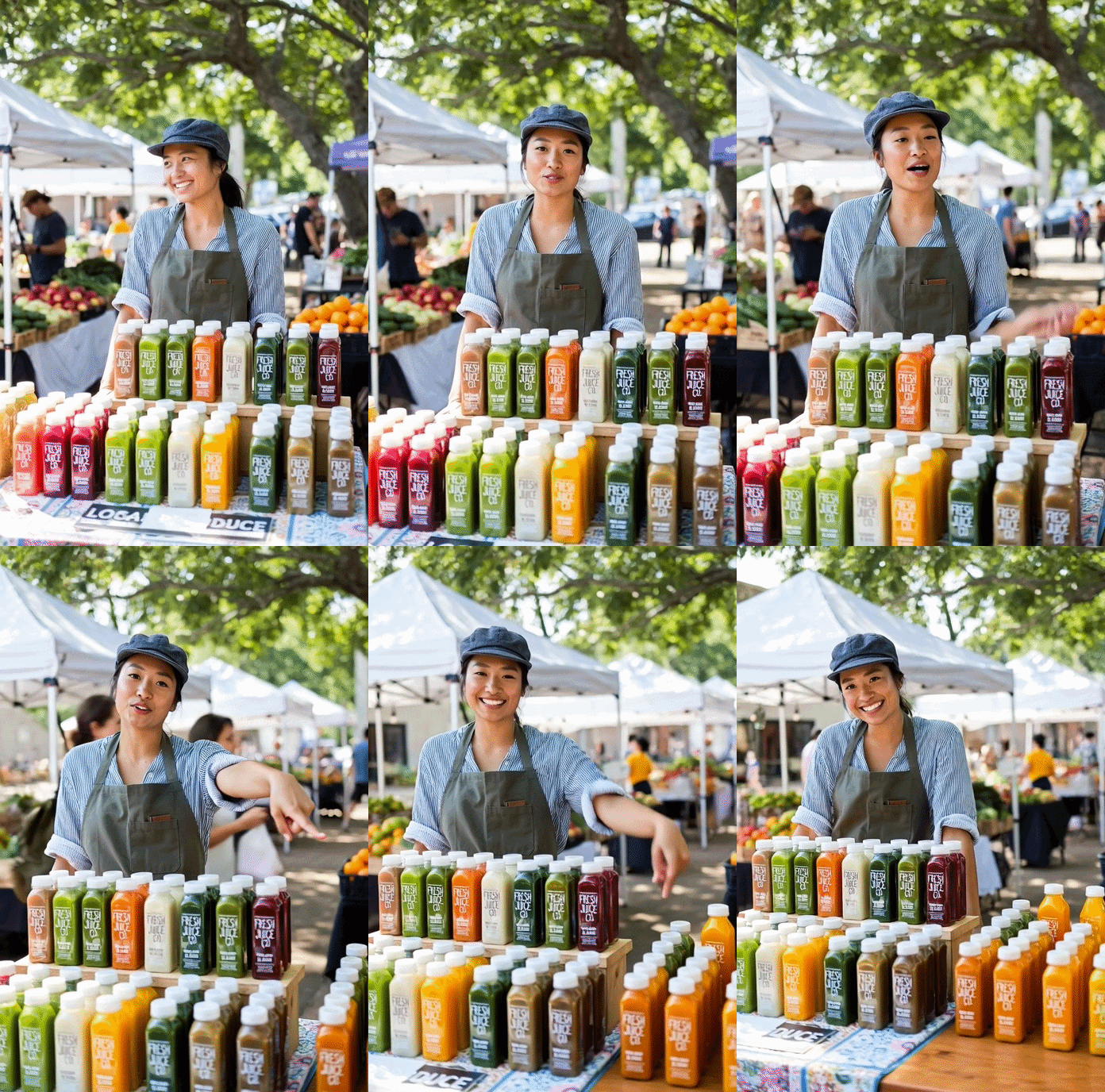
Phase 1: The Product Obsession
In the early days, almost all energy goes into the product.
Recipe tweaks.
Packaging prototypes.
Nutrition labels.
Shelf life tests.
Co-packers.
Ingredient sourcing.
Founders become deeply focused on making something better than what already exists.
And that part is often done very well.
But something subtle happens here.
The founder assumes the product itself will carry the meaning.
It’s cleaner.
It tastes better.
It’s healthier.
But the market rarely organizes itself around product logic alone.
It organizes around stories, signals, and identity.
And that realization usually comes later.
Phase 2: The First Encounter With Marketing
Once the product exists, the next question appears:
How do we get people to notice this?
This is usually where the founder enters the marketing world for the first time.
They start hearing advice from everywhere:
“Work with influencers.”
“You need TikTok.”
“Content is everything.”
“Your brand needs a community.”
“Just start posting.”
So they do.
They hire a photographer.
They send product samples to creators.
They test ads.
They post on social media.
Activity begins to multiply.
Phase 3: The Content Explosion
At first, this feels exciting.
Photoshoots happen.
Videos get made.
Creators post about the product.
But a subtle shift starts to occur.
Instead of asking:
What does this brand actually represent?
The question becomes:
What should we post next week?
Marketing slowly turns into a stream of disconnected decisions.
A lifestyle shoot one month.
A bright TikTok trend the next.
A completely different aesthetic for a retail pitch deck.
Individually, each piece might look good.
But together they start to feel strangely unrelated.
Phase 4: The “Grab Things From Everywhere” Trap
This is the stage where many emerging brands get stuck.
Because the founder is trying to move fast.
So solutions are assembled from wherever they appear:
A freelancer recommended by a friend.
An agency with a strong portfolio.
A creator who already has followers.
Each contributor brings their own interpretation of the brand.
And slowly, without anyone intending it, the brand becomes a collage.
Different photography styles.
Different tones of voice.
Different visual worlds.
Nothing is technically wrong.
But nothing reinforces the same idea either.
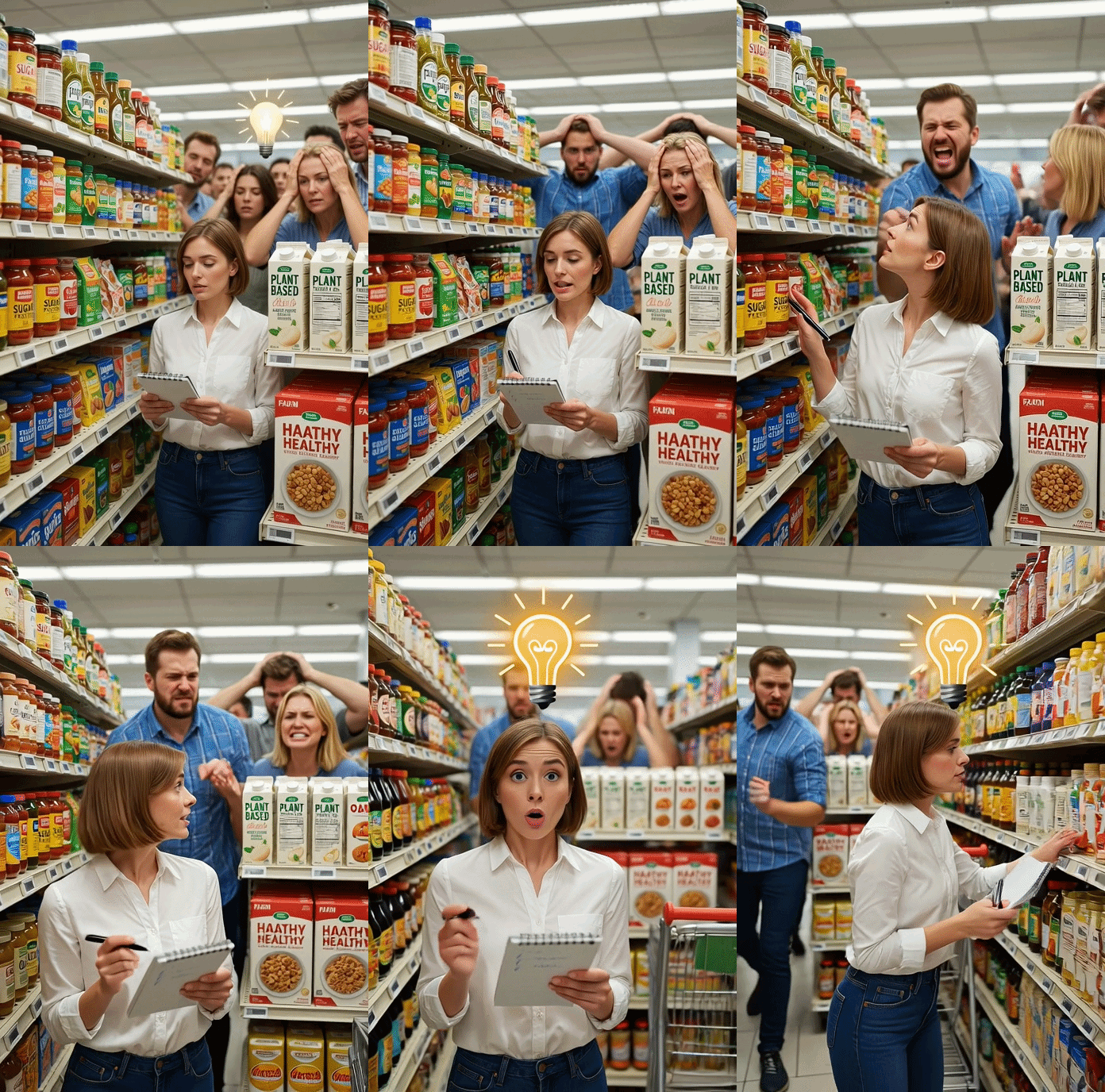
The Moment Founders Start Feeling Something Is Off
Eventually, founders start noticing something uncomfortable.
They’ve produced a lot of marketing.
But the brand still feels vague.
Consumers might like the product.
But they don’t remember the brand clearly.
Retail buyers might like the concept.
But the identity doesn’t feel fully formed.
At this point founders often believe the solution is more content.
More influencers.
More ads.
More shoots.
But the real issue usually sits somewhere else entirely.
The Missing Layer Most Brands Skip
The step that many emerging CPG companies skip is the moment where someone stops and asks:
What single idea should everything about this brand reinforce?
Not the product feature.
Not the ingredient story.
The deeper narrative.
The emotional world the brand belongs to.
Because once that becomes clear, everything else becomes easier to align:
Packaging
Photography
Creator collaborations
Retail presence
Messaging
All reinforcing the same signal.
Without that alignment, marketing often turns into expensive experimentation.
Why This Happens So Often
This pattern is surprisingly common because the CPG startup journey is built around speed.
Founders are juggling:
Product development
Retail meetings
Investor conversations
Operations
Marketing decisions often get made in fragments simply because there isn’t time to step back and build the narrative system first.
So brands grow outward before they grow coherent.
Why Some Brands Break Through
Some of the most recognizable brands in food and beverage didn’t win because they produced the most content.
They won because they built a clear narrative system early
Oatly didn’t just sell oat milk.
It built an entire identity around irreverent design, café culture, and a tone that carried through packaging, copywriting, and community presence.
Liquid Death didn’t win by explaining water purity.
It built a brand universe around humor, rebellion, and entertainment.
Every touchpoint reinforces that identity.
That alignment is what creates memory.
The Difference Between Content and Brand
Content can create visibility.
But brands create meaning.
And meaning only forms when people start associating a product with a clear identity.
That identity doesn’t come from one photoshoot, one influencer post, or one marketing channel.
It comes from everything pointing in the same direction over time.
After spending years working with food and beverage brands and creative teams, I’ve noticed that the most expensive marketing mistake rarely comes from poor execution.
It comes from skipping the moment where the brand’s story is clearly defined before the marketing begins.
Because once the story is clear, everything else starts compounding.
A Question for Founders
If you’re building a food or beverage brand right now, it might be worth asking:
Is our marketing reinforcing a clear narrative…
Or are we simply assembling content from wherever we can find it?
Sometimes the difference between the two determines whether marketing compounds — or just burns budget.
If this experience sounds familiar, I’d be genuinely curious to hear how other founders have navigated it.
Feel free to share your experience or reach out.
Published on: March 05, 2026
the best looking
content
for
food industry
folks
come &